MUT REPOSITORY: Recent submissions
Now showing items 1481-1500 of 1616
-
Factors Influencing Pastoral and Agropastoral Household Vulnerability to Food Insecurity in the Drylands of Kenya: A Case Study of Kajiado and Makueni Counties
(2016)This study establishes the determinants of household vulnerability to food insecurity in pastoral households of Kajiado and agropastoral households of Makueni Counties of Kenya. A randomly selected sample of 198 households ... -
Effects of Selected Routine Husbandry Practices on Growth Rate of Weaned Small East African Goats
(2010)This study was conducted to determine the effects of overnight housing, helminthes control, supplementation and their combinations on average weight gain of weaned Small East African Goats (SEAG) in the semi-arid southeastern ... -
Effect of land use changes on adaptive strategies for smallholder agro-pastoralists in Kenya
(2012)A study to characterize existing adaptive strategies and shifts in smallholder agro-pastoralists in relation to changes in land use and land subdivisions was carried out. A total of 48.9% of respondent indicated that there ... -
Effect of increasing duration of water deprivation on feed intake, feed digestibility and body weight gain of Nganda sheep
(2004)A study was undertaken in Kenya's southern savanna rangelands to determine the seasonal effect of Balanites glabra canopy cover on aboveground grass biomass, grass species composition, soil organic matter and soil moisture ... -
Effect of Balanites glabra canopy cover on grass production, organic matter and soil moisture in a southern Kenyan rangelan
(2003)A study was undertaken in Kenya’s southern savanna rangelands to determine the seasonal effect of Balanites glabra canopy cover on aboveground grass biomass, grass species composition, soil organic matter and soil moisture ... -
Effect of Acacia tortilis pods on intake, digestibility and nutritive quality of goat diets in southwestern Eritrea
(2002)Fresh Acacia tortilis pods were mixed with low quality native grass hay to form the following five rations: 100% hay (T 1), 25% pods and 75% hay (T 2), 50% pods and 50% hay (T 3), 75% pods and 25% hay (T 4) and 100% pods ... -
Economic factors affecting the level of beef production from ranching: an example of Kenya's cattle sector
(1993)An econometric method was used to determine the economic factors that influence the level of beef production from ranches in one of the range areas in Kenya. The study also used both cross section and time-series data ... -
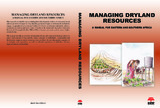
Managing Dryland Resources – An extension manual for Eastern and Southern Africa
(2002)This manual is intended for use as a field guide by development workers of community-based and non-government organizations, churches, government agencies and research institutions engaged in agricultural development. ... -
Ecological, Socio-economic and Livelihood Differentiation of Kenya's Lembus Forest Proximate Communities: The Case of the Tugen and Lembus
(2010)The Tugen and Lembus are indigenous communities found adjacent to the Lembus igenous forests. Other than these two communities, there are several others inhabiting this area the surrounding districts. The Lembus igenous ... -
Dryland Resource Management Technology Adoption in South–Eastern Kenya: Successes, Opportunities and Challenges
(2009)There are several challenges faced in the adoption of the Dryland Resource Management Technologies. An integrated system must consider the main drawbacks, in particular: policy conflicts, (ii) poor understanding of the ... -
Dryland Husbandry for Sustainable Development in the Southern Rangelands of Kenya
(2004)The Dryland Husbandry Project (DHP) came into being under an arrangement conceived by the Inter-Governmental Authority on Drought and Development (IGADD), which changed later to Inter-Governmental Authority on Development ... -
Dry land Farming Economies in Kenya
(2003) -
Dry matter yields and hydrological properties of three perennial grasses of a semi-arid environment in east Africa
(2010)Enteropogon macrostachyus (Bush rye), Cenchrus ciliaris L. (African foxtail grass) and Eragrostis superba Peyr (Maasai love grass) are important perennial rangeland grasses in Kenya. They provide an important source of ... -
Drought Management Strategies among Agro-Pastoral Communities in Non-Equilibrium Kalahari Ecosystems
(2011)Rural Kalahari communities whose livelihoods are heavily dependent on rain-fed agriculture are exposed to increasing intensity and frequency of drought spells. Subsequently their resilience is gradually being eroded and ... -
Different land use types in the semi-arid rangelands of Kenya influence soil properties
(2011)Rangelands in semi-arid Kenya have recently witnessed extensive land use changes. These changes can mainly be attributed to increased livestock populations and the response of the increased human population to both local ... -
Development of and Policy on the Range and Pastoral Industry with Special Reference to Kenya
(2003)Rangeland” or simply “range” is, by definition, “inferior” land by reason of physical and socio-economic limitations such as low rainfall, high temperatures, poor soils, and long distances from market outlets and supply ... -
Determinants of Household Vulnerability to Food Insecurity: A Case Study of Semi-Arid Districts in Malawi
(2013)This paper looks at household vulnerability to food insecurity and its determinants in two semiarid districts in Malawi. A randomly selected sample of 200 households was interviewed. The descriptive statistics revealed ... -
Desert Margins Program In Kenya: Integrated Socio-Economics Analysis Of Benchmark Sites
(2004)This paper presents socio-economic analysis of the Desert Margins Programme (DMP) benchmark sites in Kajiado and Makueni Districts in Southern rangelands, Marsabit District (Kalacha, Kargi, Korr and Ngurunit) and Turkana ... -
Constraints of rehabilitating degraded semi-arid lands of Kenya using indigenous perennial grasses
(2010)Land degradation which among others include loss of vegetation is rampant in Kenya, destroying both the fragile arid and semiarid lands and the non-arid areas. Efforts to rehabilitate semiarid areas by re-vegetation has ... -
Conceptualisation and measurement challenges in modelling pastorilists’ risk and vulnerability instigated by droughts in the group ranches of Kenya
(2014)This on-going study is assessing and modeling vulnerability and risks faced by pastoral communities in the dry areas of Lakipia in Kenya. Preliminary results from participatory rural appraisal indicate that poverty is ...